
For the millions of Americans who experience some form of tinnitus, the constant ringing, buzzing, or hissing in their ears is more than an annoyance — it can be a daily challenge that affects sleep, concentration, and overall quality of life. For years, the conventional approach has focused almost exclusively on the ears themselves. But a growing number of researchers are exploring whether this focus tells the whole story.
"Most people assume tinnitus is purely an ear problem," reflects a perspective shared by some audiological researchers. "But newer findings suggest it may be more complex — potentially involving the communication between the auditory system and the brain."
This evolving perspective has opened new conversations about how we think about auditory health — and why some people have found it difficult to find satisfactory support through conventional methods alone.
Americans affected
by tinnitus
Seek medical
attention annually
Report debilitating
symptoms
Estimates based on data from the American Tinnitus Association. Individual experiences vary widely.
What Researchers Are Exploring About the Cause
For decades, the prevailing theory held that tinnitus was primarily caused by damage to the tiny hair cells in the inner ear — the same cells responsible for converting sound waves into electrical signals. While this damage can certainly play a role, some researchers have increasingly turned their attention to what happens after those signals leave the ear.
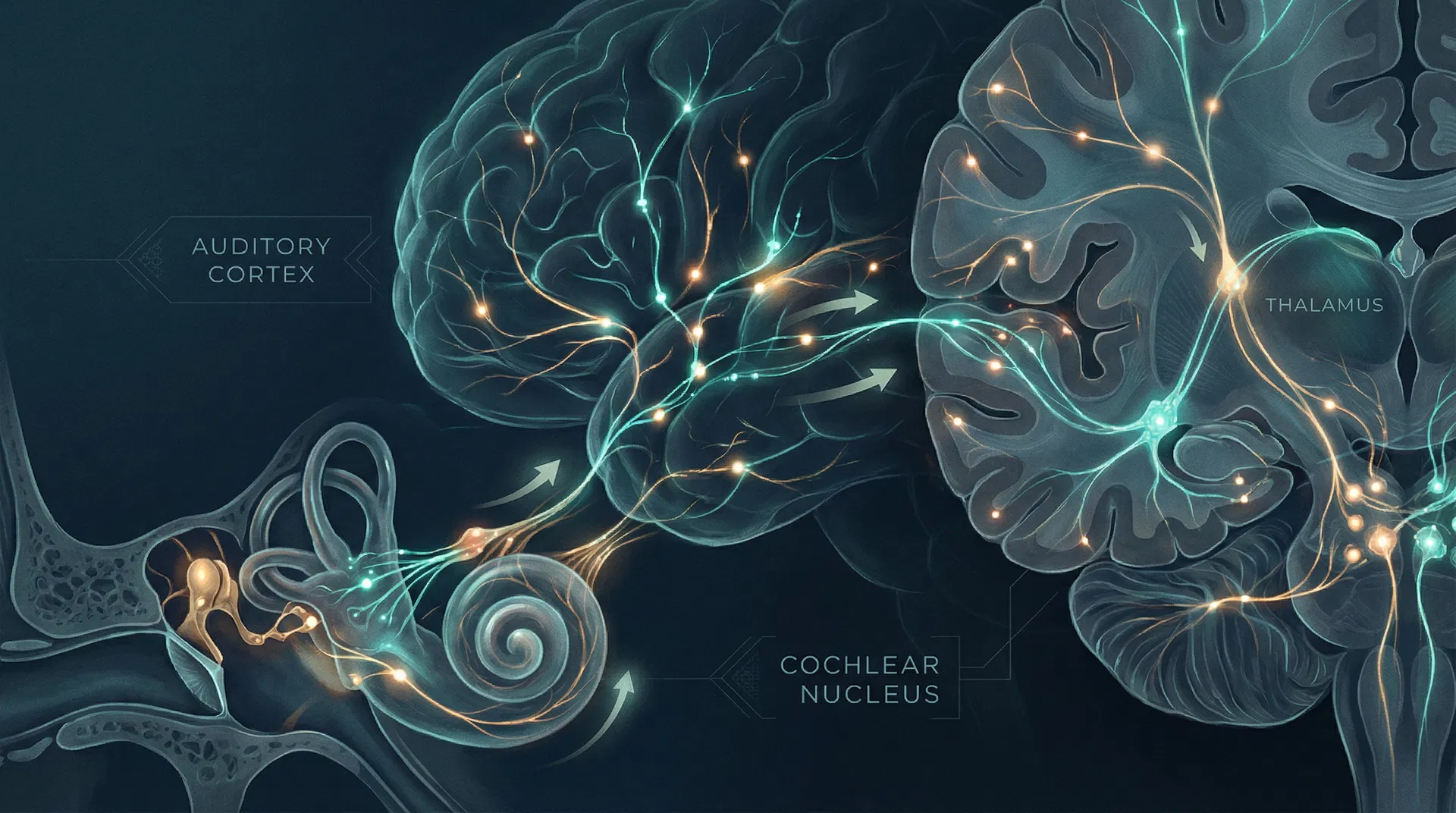
Illustration: Neural pathways between the auditory system and the brain's processing centers
The auditory cortex, located in the temporal lobe of the brain, is responsible for processing the sounds we hear. Some researchers have proposed that when the neural pathways between the ear and the brain become disrupted — whether through inflammation, oxidative stress, or nutrient deficiencies — the brain may begin generating its own "phantom" sounds. This is one hypothesis being explored to explain persistent tinnitus.
This perspective has been supported by some studies examining brain imaging of tinnitus patients, which have shown heightened activity in the auditory cortex even in the absence of external sound. According to this line of research, the brain may be "filling in the gaps" — generating sound perception where none exists externally.
Lifestyle Factors That Some Researchers Are Examining
If the neural connection hypothesis holds, then it follows that certain lifestyle factors could potentially influence the health of these pathways. Some researchers have identified common habits that may be worth examining in relation to tinnitus symptoms — though it's important to note that individual responses vary greatly.

Common everyday items that some researchers are examining for their potential relationship with auditory health
Caffeine and Stimulant Intake
While moderate coffee consumption is generally considered safe, some researchers have noted that excessive caffeine intake may overstimulate the nervous system in certain individuals. Whether this has a meaningful connection to tinnitus symptoms remains an area of ongoing study, and individual responses vary.
Chronic Stress and Sleep Quality
Stress triggers the release of cortisol, which in sustained levels may affect neural health. Combined with poor sleep — which may limit the brain's natural recovery processes — chronic stress could potentially create conditions where tinnitus symptoms feel more noticeable. However, the relationship between stress and tinnitus is complex and not fully understood.
Dietary Sodium Levels
Some audiology professionals have observed that patients who adjust their sodium intake sometimes report changes in the perceived intensity of their symptoms. The connection between sodium, blood pressure, inner ear fluid balance, and tinnitus is an area that researchers continue to explore.
Prolonged Headphone Use at High Volume
Extended exposure to loud audio through headphones may contribute to wear on the auditory system over time. The World Health Organization has noted that over a billion young adults may be at risk of hearing-related issues due to unsafe listening practices.
Understanding these factors is valuable because it shifts the conversation toward proactive self-care. While no single habit change can be expected to resolve tinnitus, many healthcare professionals agree that a holistic approach to overall health — including auditory health — is generally beneficial.
A Historical Perspective on Auditory Wellness
Interestingly, the idea of supporting auditory health through broader wellness approaches is not entirely new. During the Second World War, military physicians working with soldiers exposed to extreme noise — from artillery fire and explosions — explored techniques focused on calming the nervous system and supporting overall recovery.
These early approaches reportedly combined stress reduction, nutritional considerations, and targeted exercises designed to support the body's natural recovery processes. While the science was rudimentary by today's standards, the underlying idea — that overall wellness could influence auditory perception — has continued to interest researchers.
Today, this historical interest is being revisited through the lens of modern nutritional science. Some researchers are examining natural compounds that may play a role in supporting the health of neural pathways — not as a replacement for medical care, but as part of a broader approach to wellness.
Exploring Nutritional Approaches to Auditory Wellness
As interest in the relationship between nutrition and auditory health grows, some people have turned to dietary supplements as part of their overall wellness routine. One such product is Echozen, a dietary supplement formulated with ingredients that have been the subject of scientific interest for their potential roles in supporting neural and auditory health.

Natural ingredients that have been the subject of research interest in the context of neural and auditory wellness
Echozen's formulation includes ingredients that have been studied in various contexts for their potential roles in supporting neural health. These include compounds traditionally used in herbal wellness practices and nutrients that play recognized roles in nervous system function.
Areas of Nutritional Focus in Echozen's Formulation
Neural Pathway Support
Ingredients selected for their traditional and emerging roles in supporting healthy nerve function.
Antioxidant Properties
Natural antioxidants that may help protect cells from oxidative stress, a factor some researchers have associated with auditory system health.
Circulation Support
Compounds that have been studied for their potential to support healthy blood flow, which plays a role in delivering nutrients throughout the body.
Stress Response Balance
Adaptogenic ingredients traditionally used to support the body's natural stress response.
A Balanced Approach to Auditory Wellness

Living with persistent ringing in the ears can be challenging. While research into tinnitus continues to evolve, many healthcare professionals emphasize the value of a comprehensive approach to wellness — one that considers overall health, stress management, and nutrition alongside any medical treatment.
For those interested in learning more about nutritional approaches to auditory wellness, products like Echozen represent one option to explore. As with any supplement, it's advisable to consult with a healthcare professional before adding it to your routine, especially if you are currently under medical care or taking medications.
Learn More About Echozen
Explore the ingredients and the thinking behind Echozen's approach to supporting auditory and neural wellness.
ADD TO CART - Echozen SupplementIndividual results may vary. Echozen is a dietary supplement, not a medication. This is paid content.